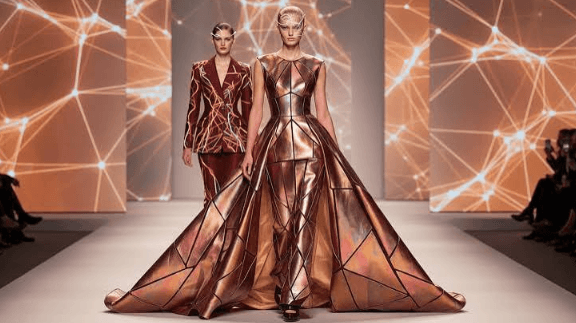
AI aggregates diverse signals—runway, street, social chatter, and sales data—to forecast fashion trends. It identifies reproducible micro-signals across platforms and accelerates insight cycles. Predictions translate into concrete design specs, from fabric choices to silhouettes and construction. With transparent provenance and governance, AI supports agile prototyping and ethical risk assessment for brands, while buyers receive bot-assisted, personalized trend forecasts. The question remains: how will these forecasts reshape decision-making as data scales?
What AI Can Do for Fashion Trend Spotting
AI enhances fashion trend spotting by aggregating and analyzing diverse data streams—runway collections, street wear, social media, search queries, and sales data—to identify emerging patterns earlier and with greater nuance.
The approach enables AI trend forecasting by correlating micro‑signals across platforms, refining predictions, and accelerating decision cycles.
Social media analytics capture sentiment shifts, supporting proactive, freedom‑driven product strategy.
Data Sources That Drive AI Forecasts
Data sources for AI fashion forecasts span diverse, high-velocity streams, each contributing distinct signals that together shape market trajectories.
This mix includes social chatter, e-commerce dynamics, runway coverage, street style, and consumer sentiment, all aligned with rigorous data provenance.
Analysts emphasize transparent lineage, traceable calculations, and reproducible models to support robust trend forecasting and strategic, freedom-oriented decision making.
From Insights to Design: Turning Predictions Into Garments
From the forecasted signals identified in data sources, designers translate validated patterns into concrete garment concepts, aligning fabric choices, silhouettes, and construction with anticipated demand.
The process translates trend forecasting into actionable specs, guided by market signals and consumer behavior data.
Runway analytics inform fabric innovation and sustainability metrics, enabling agile prototyping while maintaining freedom to innovate within measurable constraints.
Bots, Brands, and Buyers: Who Benefits and How
Bots, brands, and buyers form a triad that shapes the value chain in fashion forecasting, with each stakeholder deriving distinct and overlapping benefits from AI-enabled insights. The data-driven lens shows bots improving speed and personalization, while brands weigh risk and ethics, balancing innovation with reputation. Buyers gain transparency, agility, and cost efficiencies, though governance must address bots ethics and brands risk to sustain trust.
Frequently Asked Questions
How Do Ethical Concerns Shape AI Fashion Trend Forecasting?
Ethical concerns shape AI fashion trend forecasting through bias mitigation and ethical sourcing considerations, ensuring representative datasets and transparent methodologies while supporting freedom in design choices, consumer trust, and responsible supply chains, driving accountable, data-driven innovation across the industry.
Can AI Predict Subculture Influences Beyond Mainstream Data?
A compass needle points toward AI subculture signals, suggesting AI can identify niche aesthetics beyond mainstream data, though reliability hinges on diverse datasets; subculture indicators may be sparse, requiring careful validation and transparent interpretation to empower designers seeking freedom.
What Safeguards Ensure Privacy in Social Media Trend Data?
Privacy safeguards and data minimization are integral; platforms implement anonymization, access controls, and differential privacy to protect individual identities while enabling trend analysis. The approach emphasizes transparent governance, auditable protocols, and user-centric consent within data-driven, forward-thinking analytics.
How Accurate Are AI Forecasts Across Different Fashion Sectors?
Ironically, accuracy varies, yet AI forecasts remain directional rather than definitive; across sectors, performance improves with richer data but suffers from AI bias and dataset bias, demanding rigorous validation to sustain credible, freedom-loving innovation.
See also: How Technology Improves Communication
Will AI Replace Human Intuition in Trend Forecasting?
AI intuition impact is unlikely to fully replace human insight; forecasts will blend AI and experts, mitigating data noise, yet forecasting bias persists. The approach embraces freedom, data-driven rigor, and ongoing evaluation to balance innovation with accountability.
Conclusion
AI-driven fashion forecasting aggregates runway, street, social, and sales signals into reproducible micro-signals, delivering transparent data provenance and governance. It accelerates insight cycles, translates forecasts into concrete design specs, and guides fabric, silhouette, and construction decisions. Bots, brands, and buyers gain efficiency, ethical risk assessment, and personalized trend forecasts. As models integrate diverse inputs, the industry moves toward agile prototyping and measurable outcomes, staying ahead of shifts and avoiding false starts—data serves as the compass, not the mirror. In short, foresight guides action.
